
Synthetic vs Organic Vitamin Absorption: What Matters

Quick Summary
Synthetic and natural vitamins are often chemically identical, so origin alone does not determine vitamin absorption. The difference depends on the nutrient: vitamin E, vitamin D and folate show form-based differences, while vitamin C shows little difference between sources.
- Natural vitamin E (RRR-alpha-tocopherol) is retained in body tissues at higher levels than synthetic vitamin E.
- Synthetic vitamin C is chemically identical to the vitamin C found in fruit.
- Vitamin D3 raises and maintains blood 25(OH)D levels more effectively than D2 at comparable doses.
- Check vitamin E labels for d-alpha-tocopherol (natural) versus dl-alpha-tocopherol or all-rac (synthetic).
- Absorption measured in a blood draw is not the same as a proven health outcome.
Table of Contents
- What Synthetic and Natural Vitamins Actually Mean
- Does Chemical Structure Change How Vitamins Are Absorbed?
- Vitamin-by-Vitamin Absorption Evidence
- How to Identify Synthetic Vitamins on a Label
- Is Synthetic Vitamin C Bad for You?
- Food-Based Vitamins vs Synthetic Vitamins: Where the Evidence Stands
- Choosing a Multivitamin Based on Your Own Needs and Label
- Frequently Asked Questions
What Synthetic and Natural Vitamins Actually Mean
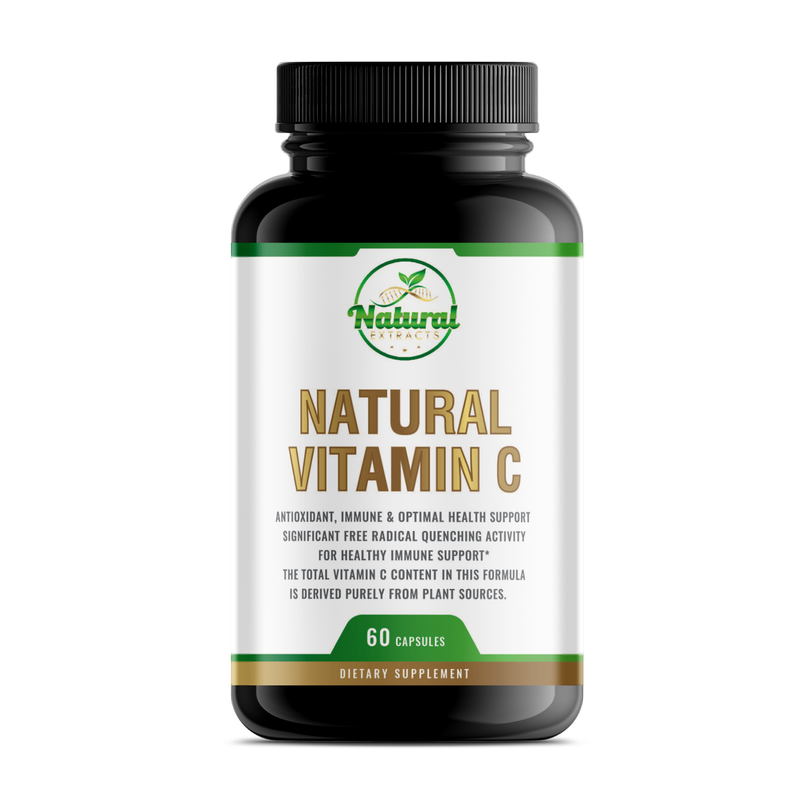
Synthetic vitamins are produced in a laboratory or factory from chemical starting materials, and they are usually a single, purified molecule. Natural vitamins are extracted from food sources such as plants, yeast, or fermentation, and they often arrive with companion compounds. See how plant-sourced vitamin C is made and labeled. That difference in origin is real, but it does not on its own tell you whether your body absorbs one form better than the other.
Many shoppers assume "natural" automatically means "better absorbed." The evidence on vitamin absorption is more mixed, and it depends heavily on which nutrient you are looking at.
Synthetic, natural, food-based and whole-food supplements defined
Labels use these terms loosely, so it helps to separate them:
- Synthetic supplements use vitamins made by chemical processes, often identical in structure to the natural compound.
- Natural supplements use vitamins derived from plant or other biological sources, which can still be isolated and purified.
- Food-based supplements start from foods or food concentrates but may be standardized to a set nutrient amount.
- Whole-food supplements are made from dried, minimally processed whole foods, so their nutrients arrive alongside the food matrix.
Each category can be legitimate. The label is the place to check what you are actually buying.
Does Chemical Structure Change How Vitamins Are Absorbed?
Chemical structure matters because the body reads molecular shape. Some vitamins exist in several forms, and the forms are not all handled the same way. This is where the synthetic-versus-natural debate becomes specific.
Vitamin E: RRR-alpha-tocopherol versus all-rac-alpha-tocopherol
Vitamin E is the clearest example. Natural vitamin E is labeled as RRR-alpha-tocopherol, while synthetic vitamin E is labeled all-rac-alpha-tocopherol, which is a mixture of eight stereoisomers, only some of which are biologically active. Research has generally found that the natural form is retained in the body at higher levels than the synthetic mixture, which is why the two forms are not interchangeable at the same dose. Check the label for "d-alpha-tocopherol" or "RRR" versus "dl-alpha-tocopherol" or "all-rac."
Folate and folic acid: why form matters
Folate is the naturally occurring form found in leafy greens and other foods, while folic acid is the synthetic form added to supplements and fortified grain products. Folic acid is more stable and absorbs well, but the body must convert it to the active form before use. Some people carry genetic variations that slow this conversion, which is one reason some shoppers look for supplements that list methylfolate directly. This is a factor worth discussing with a clinician rather than deciding from a label alone.
Vitamin-by-Vitamin Absorption Evidence
Absorption is not one question. It changes with each nutrient, so a blanket claim that "natural" is better absorbed does not hold up. The table below separates what is actually known per nutrient from what is marketing shorthand, and it flags where the evidence is about absorption rather than health outcomes.
| Nutrient | Synthetic form | Natural or food form | What the absorption evidence generally shows | Where the evidence is limited |
|---|---|---|---|---|
| Vitamin E | all-rac-alpha-tocopherol (dl-alpha-tocopherol) | RRR-alpha-tocopherol (d-alpha-tocopherol) | The natural RRR form is retained in body tissues at higher levels than the synthetic mixture at the same dose; the synthetic form is a mixture of eight stereoisomers, and only some are biologically active | Retention studies are short-term and use blood or tissue markers, not clinical outcomes |
| Vitamin C | Ascorbic acid | Ascorbic acid from fruit or plant sources | Chemically identical molecule; absorption is dose-dependent and saturates at higher intakes, so source matters less than total amount and timing | Human outcome studies have not consistently shown food-derived vitamin C outperforms synthetic ascorbic acid |
| Folate | Folic acid | Folate from foods; methylfolate (5-MTHF) as a supplement form | Folic acid is stable and well absorbed but must be converted to the active form; food folate is less stable and less bioavailable per microgram | Conversion varies with genetic variation in the MTHFR enzyme; clinical significance for most people is uncertain |
| Vitamin B12 | Cyanocobalamin | Methylcobalamin, adenosylcobalamin, hydroxocobalamin | All forms are absorbed through the same intrinsic factor pathway; differences are mainly in retention and conversion, not initial uptake | Head-to-head outcome trials are sparse and small |
| Vitamin D | Ergocalciferol (D2) | Cholecalciferol (D3) | D3 raises and maintains blood 25(OH)D levels more effectively than D2 at comparable doses | Long-term outcome differences between D2 and D3 are not well established |
| Vitamin A | Retinyl palmitate, retinyl acetate | Beta-carotene and other provitamin A carotenoids from foods | Preformed retinoids absorb efficiently; provitamin A carotenoids convert inefficiently and conversion varies widely between people | Conversion efficiency is hard to predict and depends on genetics, diet, and nutrient status |
Two patterns stand out. First, the nutrients where form genuinely changes absorption, vitamin E, vitamin D, and folate, are the ones where label reading pays off. Second, for nutrients like vitamin C, the molecule is the same whether it is made in a lab or extracted from fruit, so absorption differences come from dose, food matrix, and companion compounds rather than from origin.
A common mistake is to read a vitamin E retention study and apply its conclusion to every nutrient on the shelf. The evidence is nutrient-specific. When you see a broad claim that natural vitamins are absorbed better, ask which nutrient and which study. If the answer is vitamin E, the claim has support. If the answer is vitamin C, it usually does not.
Watch out: absorption measured in a blood draw is not the same as a health outcome. A form that raises blood levels more may or may not produce better clinical results, and most supplement research measures the former rather than the latter.
How to Identify Synthetic Vitamins on a Label
Reading the label is the most practical step a shopper can take. Look at the ingredient panel and the Supplement Facts box together.

- Check vitamin E for "d-alpha-tocopherol" (natural) versus "dl-alpha-tocopherol" or "all-rac" (synthetic).
- Look for "ascorbic acid" for vitamin C, then check the source line if the brand discloses one.
- For folate, note whether the label says "folic acid" or "methylfolate" or "5-MTHF."
- Watch for "food concentrate," "whole food blend," or named plant sources if you want food-derived nutrients.
Many shoppers pick up a supplement bottle at a kitchen counter and compare these terms before buying. Taking two minutes with the panel usually answers the question.
Is Synthetic Vitamin C Bad for You?
No. Synthetic ascorbic acid is chemically identical to the vitamin C found in fruit, so the body cannot distinguish between them at the molecular level. The concern people raise is usually about whole-food nutrient complexes that contain bioflavonoids and other compounds, not about the vitamin C itself.
The real question for most shoppers is dose and total intake. Vitamin C is water soluble, and the body excretes excess, so very high doses from any source may not be useful. Check the amount per serving against the Daily Value on the label, and consult a healthcare provider if you have a condition or take medications.
Food-Based Vitamins vs Synthetic Vitamins: Where the Evidence Stands
The balanced summary is this: food-based and whole-food supplements offer a different package of nutrients and companion compounds, and some people prefer that for reasons of diet or values. Synthetic supplements deliver exact, standardized doses that are easy to measure and compare. For several nutrients, including vitamin C, research has not shown a clear absorption advantage for the food-derived version.
What most comparisons miss is that absorption and health outcomes are two different questions. A supplement can raise blood levels of a nutrient without improving any clinical endpoint, and a food-based product can score lower on an absorption test while still supporting nutrition through the food matrix. When you read a study, check which question it answered.
A practical way to grade the evidence:
- Strongest evidence is for correcting a diagnosed deficiency. For example, folic acid is well established for preventing neural tube defects, and synthetic forms are used precisely because their doses are reliable.
- Moderate evidence covers nutrient status markers, such as raising serum 25(OH)D with vitamin D3 or improving folate status with folic acid.
- Weaker and more inconsistent evidence covers broad claims that food-derived vitamins produce better health outcomes than synthetic ones across the board. These claims tend to be nutrient-specific at best and are often extrapolated from absorption studies.
Study quality matters here. Many comparisons are small, short, and use blood markers rather than clinical endpoints. Some are funded by manufacturers with a stake in the result. A single study showing higher absorption of a food-derived form is not proof that it improves health, and a single study showing no difference does not prove equivalence for every population.
Where the evidence is genuinely thin, it is fair to say so. The honest position is that form matters for some nutrients, dose and adherence matter for all of them, and the food matrix is a reasonable preference rather than a proven absorption advantage across the board.
Watch out: "food-based" on a label does not guarantee that the nutrient amount comes mainly from food. Many products combine a small amount of food concentrate with a standardized synthetic dose, so read the Supplement Facts panel rather than the front label.
Choosing a Multivitamin Based on Your Own Needs and Label
Start with your own needs, not the marketing. A multivitamin for a woman may include different levels of iron, calcium, or folate than one for a man, so compare the Supplement Facts panel against your goals.
At Natural Extract, our Ultra Multivitamin for Women (60 count, $54.95) and Ultra Multivitamin for Men (60 count, $43.99) are formulated for each group, and both are available on our site. Our Natural Vitamin C (60 count, $49.99) is plant-sourced if you prefer a food-derived option for a single nutrient. If you want to read more about clean-label ingredients before deciding, our Clean Label Supplement Ingredient Guide covers what to look for on the panel.
These are dietary supplements, not drugs. They are not intended to diagnose, treat, cure, or prevent any disease, so check with your healthcare provider before starting any supplement, especially if you take medication or have a medical condition (the FDA).
Next step: Pull out a bottle you already own and find its vitamin E, vitamin C, and folate lines. Compare them against what you read here, then decide which label details matter most for your routine.
Frequently Asked Questions
Do organic vitamins absorb better than synthetic vitamins?
Not as a general rule. Absorption depends on the specific nutrient and its chemical form. Judge each product by its specific form and dose rather than by the word organic alone.
Is synthetic vitamin C bad for you?
Questions about the right amount of any supplement are best discussed with a healthcare provider.
How do I tell if a vitamin is natural or synthetic?
Check the ingredient list for the specific form. Natural vitamin E is usually labeled d-alpha-tocopherol or RRR-alpha-tocopherol, while synthetic versions appear as dl-alpha-tocopherol or all-rac-alpha-tocopherol. Synthetic folate appears as folic acid, while food-derived forms are listed as methylfolate or 5-MTHF. Terms such as whole food or food-based suggest a food source, but the label should list the ingredient form so you can confirm it.

